Surviving After Survival
What happens when death doesn't come

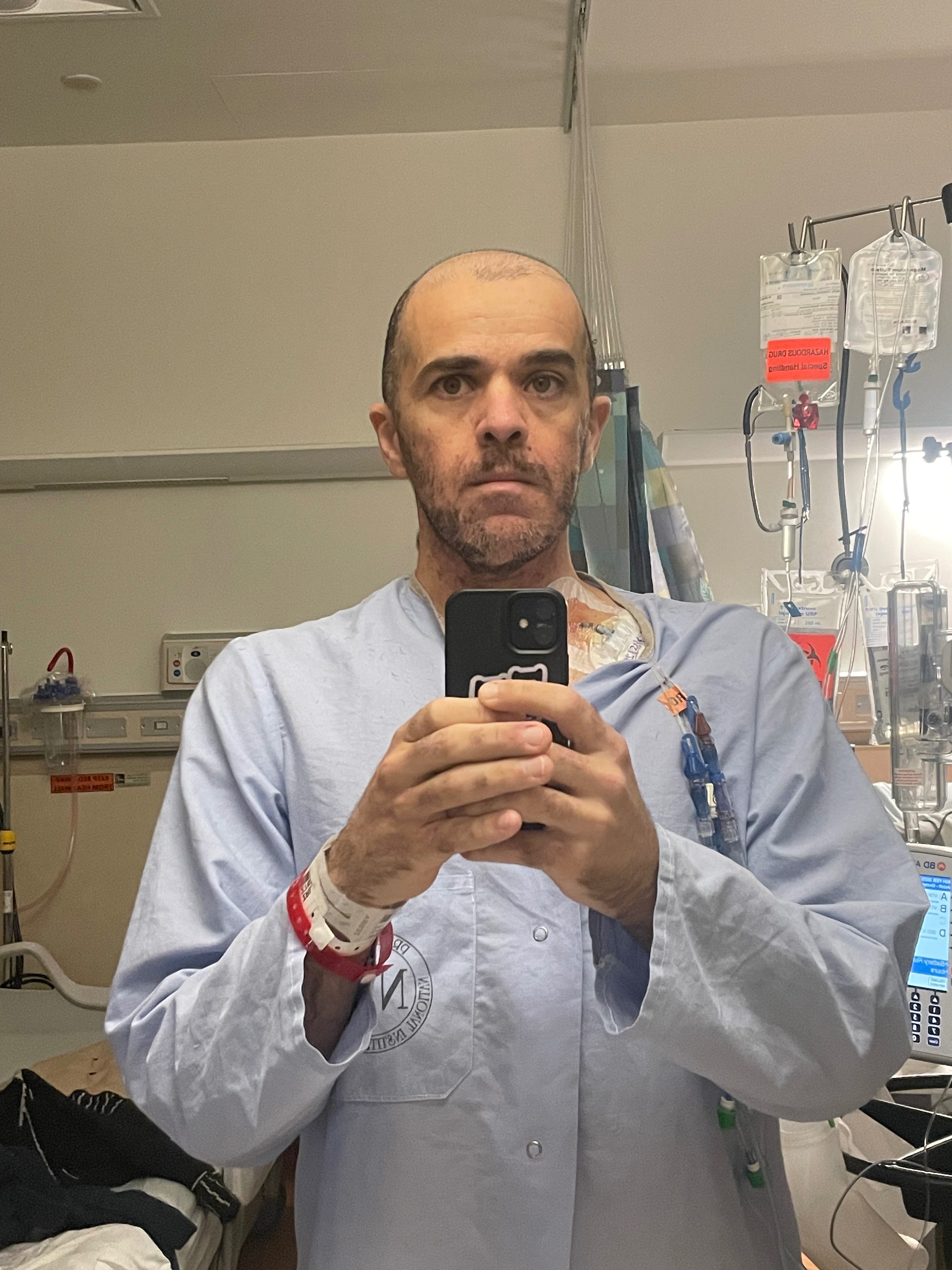
Last week I was back at the NIH in Washington DC for my one year follow up on my bone marrow transplant. By all accounts, this was a life-saving procedure, effectively curing me from a rare gene mutation known as GATA-2 deficiency; A condition that had been actively affecting my health since I was 14 years old. When I first went into the hospital, they told my parents I had until the weekend to live.
Living with a dynamic disability is a hard thing to understand. I had to drop out of high school because I was in the hospital too often. I would spend months not being able to do much. Then other times I would be organizing and executing a festival with 10,000 attendees, opening venues, tirelessly working on projects in a way that most people would find excessive.
If I was going to die, I was going to live as hard as I could until then.
So when I found out I needed a bone marrow transplant, a month before I was moving to Portugal, I thought, Okay, here it is. The ending I was always promised.
This isn’t something I shared with my friends or family during the process but I was fully ready and expecting to die. I prepared legal documents. I set up fail-safes. I wrote goodbyes. I cut the people who I was unaligned, and I made sure that the people I love know I love them. In a way, it was a relief. It was finally time for the thing I had been expecting for 22 years.
So when I went back to the NIH last week after easily the hardest year of my life, it was with mixed emotions. The common response when I told people I was going for my one year check up was excitement for me.
You must be so happy!
It felt almost mean to tell them that I not only didn’t feel happy, but I felt a loss. I felt (and feel) like I am grieving the death I didn’t get.
Sitting alone in my room at the Safra Lodge on the NIH campus, looking at a bare tree, freshly fallen snow, and a half-finished construction for a new research center, my suitcase lost by the airline, I couldn’t help but think that I was never supposed to get here.
In ways both biological and psychological, the person I was before the transplant was gone, and I am still making sense of who this stranger I inhabit is now.
On day 4 of nonstop tests and appointments, after scans, shots, and tests on my eyes, teeth, heart, lungs, brain… I finally saw the head of the study in a small, nondescript exam room, who told me I had one of the best outcomes so far. But success, in this context, felt ill-fitting. My story arc had already been written and tied up. Yet here I was. I’m not a story that resolves because survivorship doesn’t resolve. It lingers. It cycles.
This doesn’t mean I’m not grateful to be alive. It means for the first time in my life I am asking a different question. Not whether I will survive, but what is survival for?
A couple months ago my partner vōx wrote in an essay, “I don’t want to be a warrior. I want to be witnessed.” To be sick and survive is to be a witness and to be witnessed on an individual and structural level. We are the canaries in the coalmine. Not because we are fragile, but because we can sense the toxicity first. Being witnessed more than often tends to be measured in milestones, not aftermath. We are held up when we can be shaped into a story of hope, perseverance, or medical marvel. But to witness illness from within is to understand, viscerally, that there is no real separation between the personal and the structural. The body makes that impossible. To be institutionalized for long enough is to see how quickly private suffering reveals public failure. We live in the gaps long before society learns how to name them.
That, too, is a kind of gift.
When life becomes hard in ways that cannot be ignored, the conversations you want to have are the ones most people have been trained to avoid. Illness strips away the luxury of pretending. It reveals how much of what we call a successful life is really just distraction: endless tasks, endless planning, endless performance, endless keeping up.
So what does it mean to survive after survival?
It’s a question that is only raising more questions for me right now. I wish I had a neat way to wrap this up, but the truth is, it’s still unfolding. I do know this, though. When you have already made peace with death, being given back your life is not a simple gift. It’s a confrontation. With time, with self, with society, with desire. Maybe that’s the real aftermath no one really knows how to celebrate. Not the milestone, but the disorientation.
The past few years I have really struggled with staying present. As I enter into this new life, I’m finding that presence feels like the key.
How to witness and be witnessed.
How to let a life mean something even when it no longer fits the story you built around it.
Not everything is a problem that needs solving. Not every life can be measured by momentum. We are human beings, not human doings.
And sometimes survival is not a triumphant return. Sometimes it is simply sitting in the strange, unfinished fact of being here.
Of course, we all experience many deaths in one life. I would love to hear your experience in this cycle.
This really resonated.
You’re not alone in this—there are some of us who also lived past what was supposed to be the ending, even hospice, and are still figuring out what comes after.
The way you described survivorship not resolving, but lingering and cycling… that’s exactly it.
Thank you for putting words to something most people don’t talk about.
What a great piece. I think most of us are not asking the right questions. One of the biggest takeaways from when my mother was dying was that she just wanted to be witnessed. So many family members were trying to fix things and were getting so frustrated when they couldn't fix it. But she just wanted people to be with her, to witness, to experience her. Thank you for writing this.